Crossroads

There is only one holiday, but several places worth going. Put the candidates into a single table and let AI fill in the flights, the lodging, how many days each place really needs. Then score them against the mood you want from this trip — spending carefully or freely, recharging or covering ground, skimming the surface or digging in — and the best fit becomes obvious at a glance. Once the destination is settled, the itinerary gets built in the same place: which city on which day, how you get there, what you do, where you sleep, what it costs. Add photos, export it as a web page or a PDF, and hand it to whoever is travelling with you.
Why I built it
There was one stretch of National Day holiday and several places I wanted to see: Xiamen, Yunnan, Xinjiang, each appealing in its own way. I had checked the flights and read the guides, and still could not decide — not for lack of information, but because it sat scattered across half a dozen apps and could never be laid out on the same table. None of them answered the questions that actually mattered: how much more does A cost than B for this holiday? Which one will wear me out? Do I have enough days to do it properly? And how many times the normal price are those particular travel dates?
So: what if I listed all of it first, and compared it side by side? That is where Crossroads came from. It is the fourth thing in this series, and what it handles is the small matter of a holiday.
Candidates
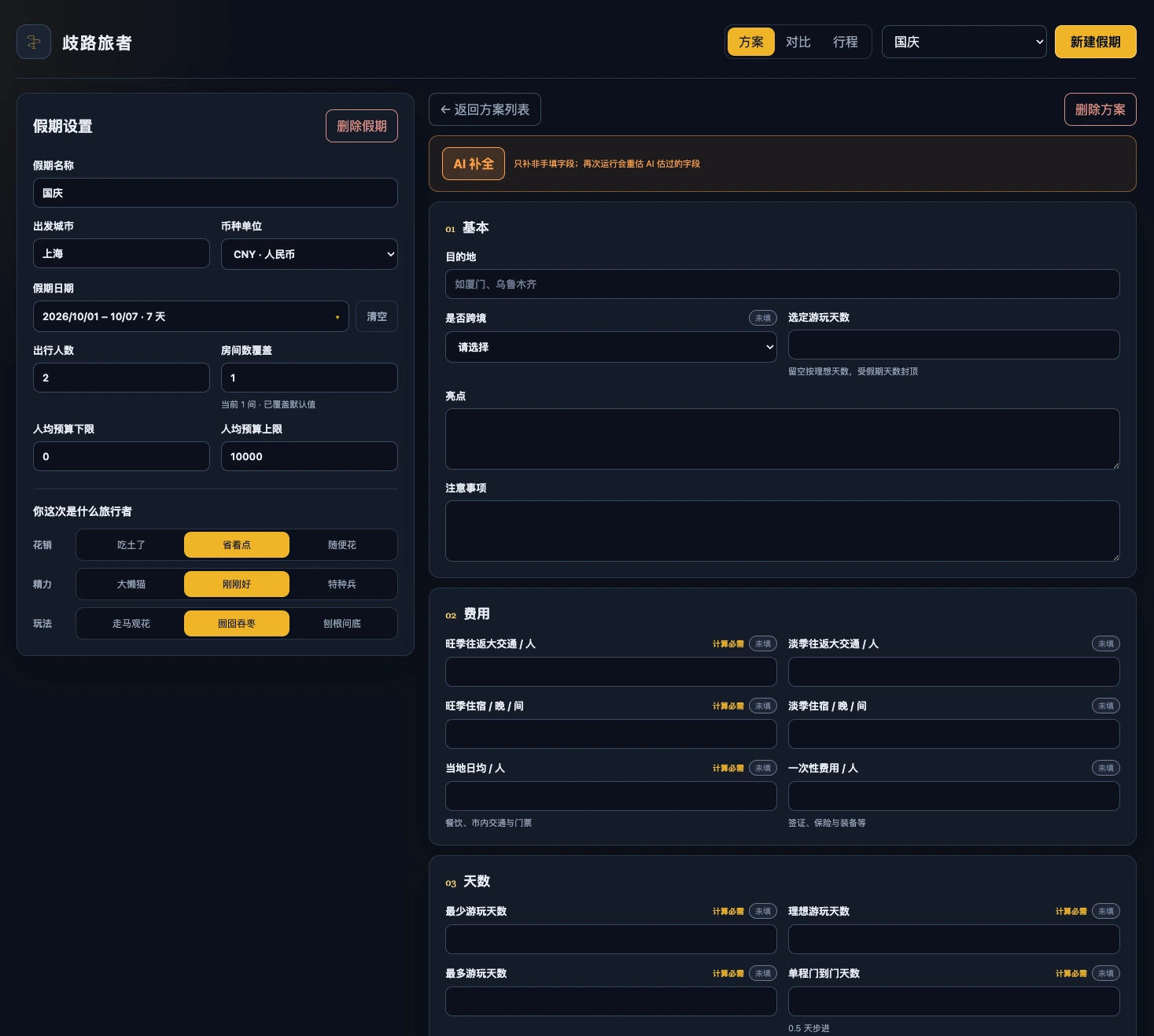
Start with the holiday itself: when, from where, how many people, how many rooms, and the budget per person. Then add the places you are considering — as many as you have, up to six. Every candidate is the same table of nineteen fields: round-trip travel and lodging at both peak and off-season prices, daily spending on the ground, how many days the place deserves, how many days the journey eats, how much you move around once you are there, the time difference, visas, language and payment, and how much preparation it takes before you leave.
You can research and fill it in yourself, or hand the whole thing to AI. It searches the web for prices around your travel dates and fills the table in one pass, marking each value as an AI estimate with a line of reasoning and a timestamp beside it. Mixing the two is fine: anything you entered yourself is never overwritten.
Comparison
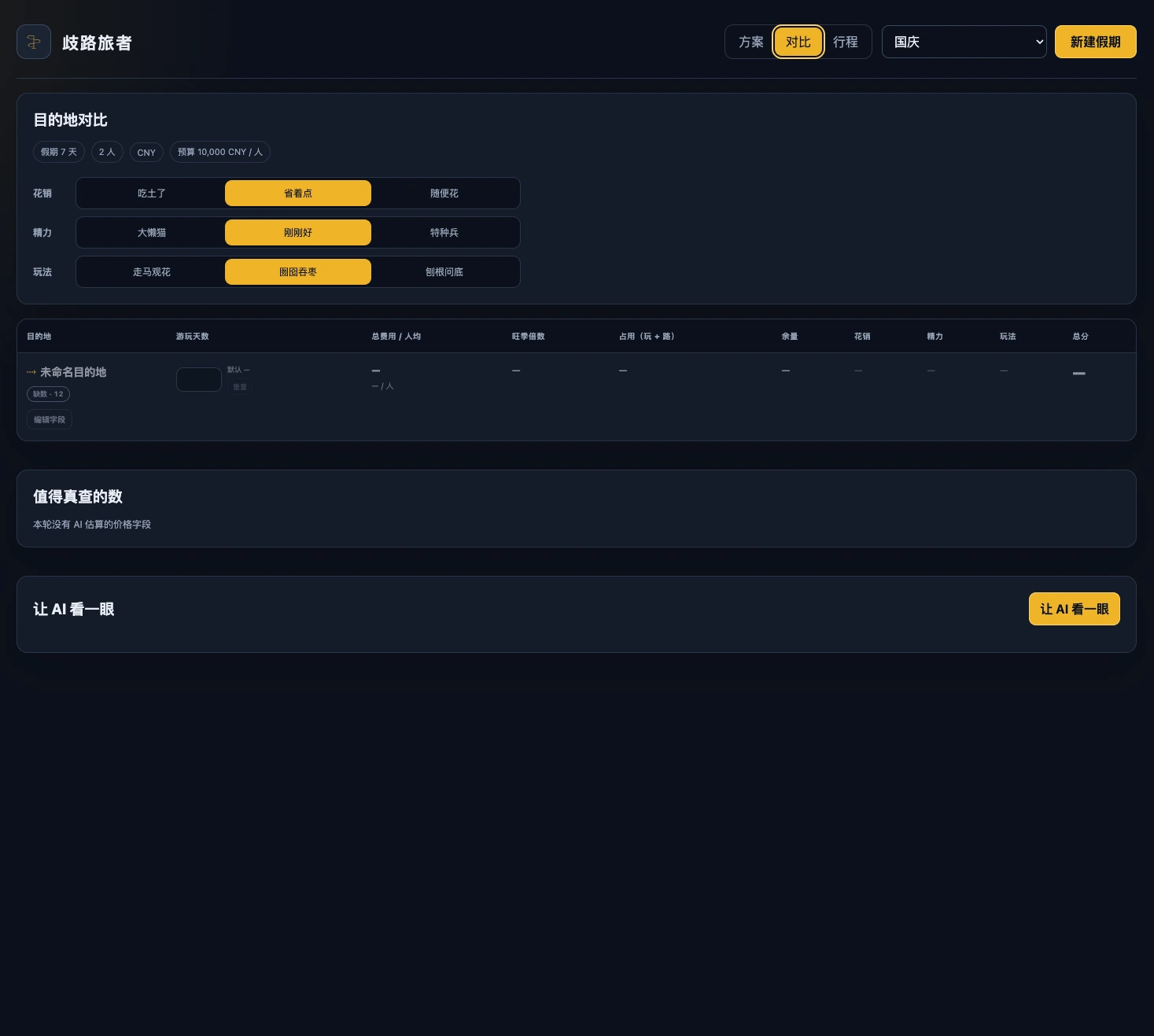
First, pick the mood you are travelling in. Three axes, three settings each. Money — tight, moderate, don't care. Energy — take it easy, just right, cover ground. Depth — skim, the usual, dig in. Do you want something light, cheap, mostly a chance to recharge? Or are you full of energy and after something thorough? Or somewhere in between? Three taps and it is set.
Every candidate is then scored against that mood, and the best fit for this particular holiday becomes obvious. Days count too: with eight days off, going somewhere that deserves seven is a different holiday from going somewhere three days can cover. Prices are estimates, so where the estimates are shakiest it tells you which numbers are worth checking yourself. You can also have AI write a short assessment at the end — every figure comes from local calculation, and AI only interprets it.
Itinerary
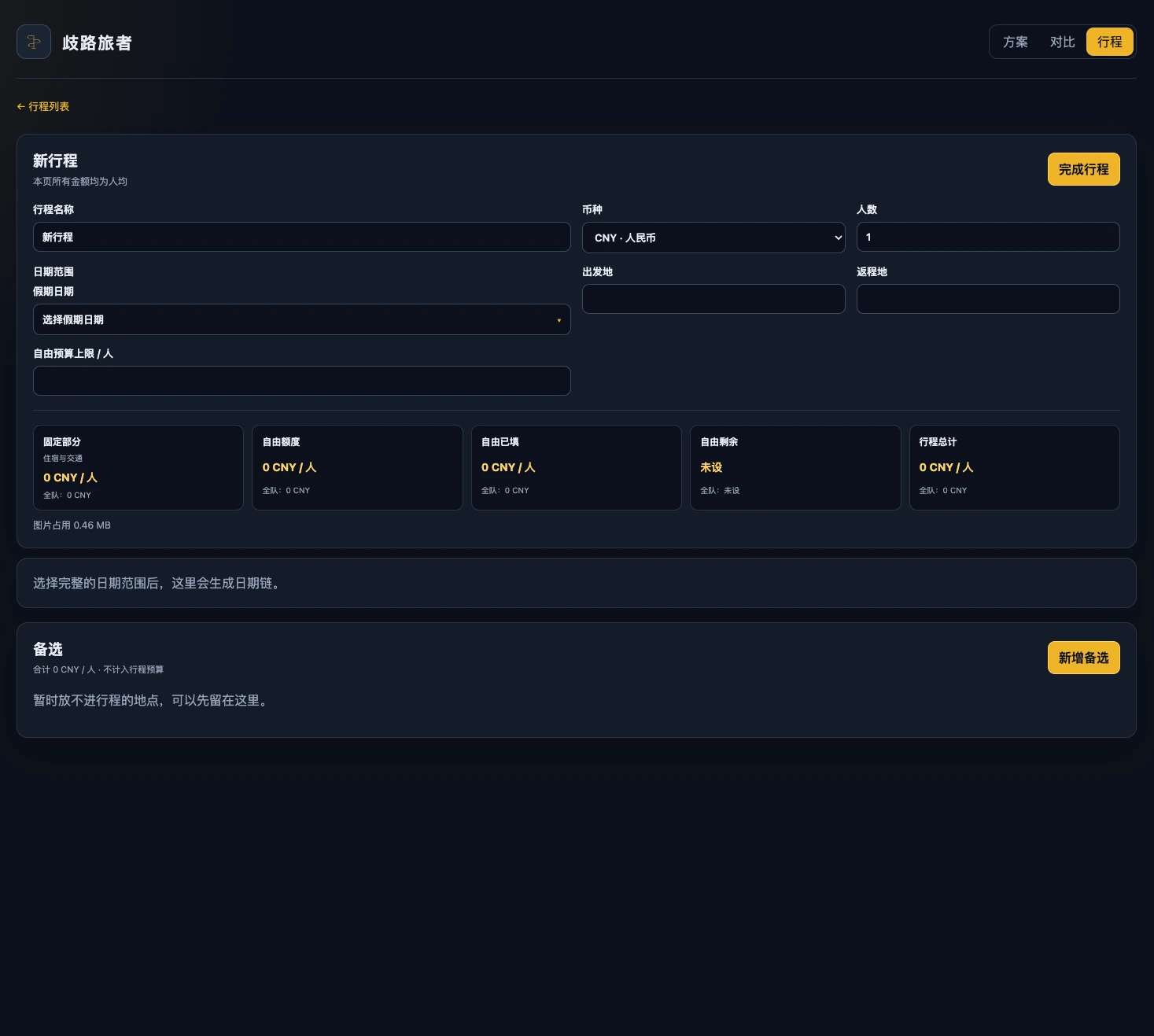
Once the destination is settled, the itinerary gets built in the same place. Pick the dates and you get one card per day. Fill in which city you sleep in each night and the travel between cities appears on its own — what you take, from when to when, how much. Within each day you lay out the actual stops: the ones with fixed times stay put, the ones with only a duration can be slotted in anywhere, and you can drop a leg of travel between any two. The budget splits in two: lodging and intercity travel are already booked, so they simply add up; sights, meals and taxis are the flexible part, where you set a ceiling and watch it fill. Restaurants and shops you have your eye on go in a "maybe" list, for whenever an afternoon opens up. Every stop can carry photos.
When it is done, hit "finish" and it becomes one clean page: where you are today, how you get there, what you see, where you sleep, what it costs. Export it as a single web page or save it as a PDF — send it to the people coming with you, or keep it open as you go.